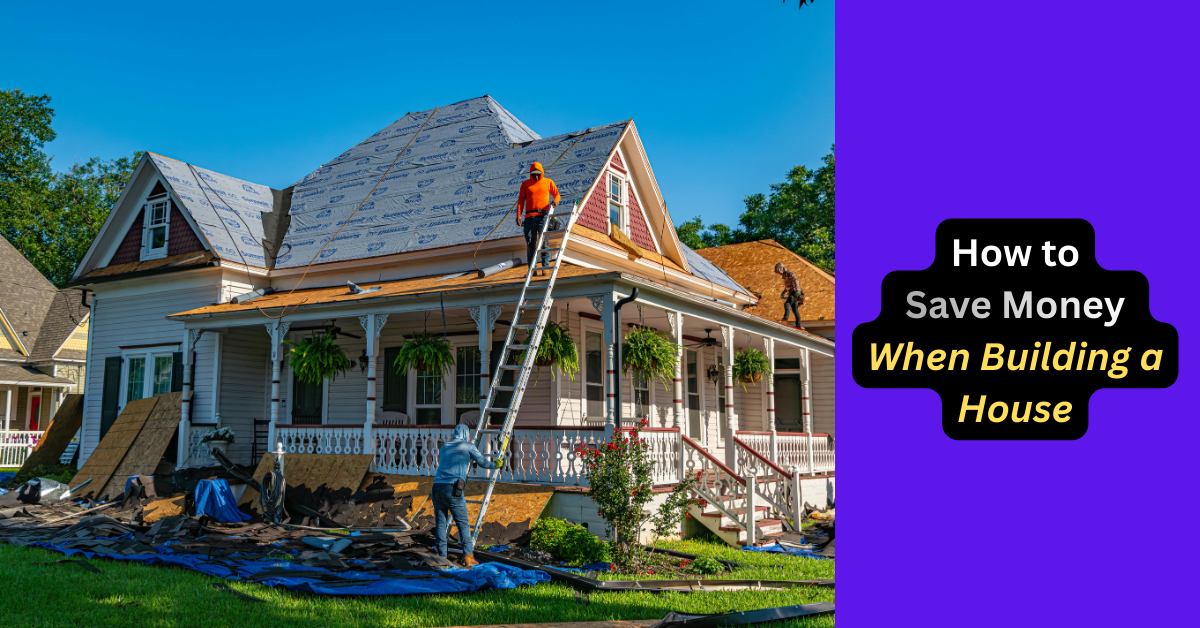
People put money into unnecessary things when building a house; however, they can save some amounts from that, but they are unable to do that because they don’t know how to save money when building a house, through which they have to face financial stress in the future.
Saving money is important because it will protect our financial life and help us to sleep better at night without any financial stress.
Saving money when building a house is super important for some very real, everyday reasons. Here’s reason you should know.
Why Is It Important to Save Money When Building a New House
Saving money when building a house is very important for some very real, everyday reasons.
Saving money is as important as making money because you cannot spend all your money; if you do, you will face some financial stress in the future because when you get sick or suddenly face any emergency, then saved money will stand for you.
Let’s know why it is important.
Things Always Cost More Than You Think
Almost every house build has surprises: the soil is bad so foundation costs extra, the price of lumber shoots up, the city wants another $8,000 in random fees, rain delays the job and you pay workers longer.
If you don’t have a buffer of saved money, you end up with a half-finished house and a big problem.
You Avoid Scary Debt
If you run out of cash mid-build, a lot of people take out expensive loans or max out credit cards at 20%+ interest.
That can trap you paying thousands extra for years. Having your own saved money keeps you in control and saves you from that nightmare.
You Get to Make Choices, Not Just the Cheapest Ones
When money is tight, you’re forced to pick the ugly $15 faucet, cheap windows that leak air, or skip the insulation you wanted.
When you’ve saved properly, you can choose things that actually make your house nice and save you money later (like better windows that cut your power bill).
Life Doesn’t Stop While You Build
Cars break, someone gets sick, jobs get shaky. If every cent is tied up in the house and an emergency hits, you’re screwed.
Saved money gives you breathing room so one bad thing doesn’t destroy the whole dream.
You Sleep Better at Night
Seriously. Building a house is already stressful. Knowing you have extra money saved means you’re not lying awake at 3 a.m. wondering how you’ll pay the electrician next week.
Building a house is one of the biggest things most people ever do with money.
Having extra saved isn’t being “cheap” — it’s being smart and protecting yourself from the chaos that almost always shows up.
The people who save ahead usually finish happier, in a better house, with way less stress.
How to Save Money When Build a House
As you know above saving money is important for your future , you can make a beautiful house in your budget and save 1000$ and more for your future so let`s dive deeper and understand how to save money when building a new house.
Start with the Biggest Money-Saver: Build Smaller and Simpler
The single fastest way to cut costs is to shrink the house and keep the shape dead simple.
Every square foot you add costs between $150 and $250 (or more) depending on your area, so dropping from 2,800 sq ft to 2,000 sq ft can easily save you $120,000–$200,000 before you even start.
A plain rectangle or square with a basic gable roof (the classic triangle shape) is the cheapest possible design because it uses the least roofing, siding, and foundation for the space you get. Complicated roofs with hips, valleys, dormers, or multiple levels add thousands in labor and materials.
The same goes for walls — every jog, bump-out, or angled wall costs extra framing and siding. If you can live with a straightforward box, you’ll thank yourself when the bills come in.
Choose the Right Foundation and Keep Dirt Work Cheap
A full basement is the most expensive foundation you can pick — often $30,000–$80,000 extra.
If your lot is fairly flat and the soil is decent, a concrete slab-on-grade or a crawl space will usually save you tens of thousands.
Even a partial basement (just under part of the house) is cheaper than a full one.
Also, avoid building into a steep hill if you can help it; major grading, retaining walls, and deep footings explode the budget fast.
Use Stock Plans and Standard Everything
Paying an architect for fully custom drawings can run $15,000–$50,000 or more. Instead, buy a ready-made plan online for $800–$2,000 and have a local drafter tweak it slightly if needed (still way cheaper).
Stick to standard window and door sizes you can buy at any big-box store, use 9-ft ceilings instead of 10-ft or vaulted everywhere, and space your wall studs and roof trusses 24 inches apart instead of 16 inches (unless your local code forces 16″).
These small choices add up to big savings in materials and labor.
Keep Plumbing in One Area
Plumbing is surprisingly expensive. The more you spread out bathrooms, the kitchen, and the laundry room, the longer the pipe runs and the higher the cost.
Stack bathrooms above each other in a two-story house and keep the kitchen, laundry, and a powder bath close together. This one trick alone can save $5,000–$15,000.
Fight “Upgrade Fever” at the Builder’s Design Center
Builders mark up flooring, cabinets, countertops, lighting, and tile like crazy — sometimes 100% or more. Pick the basic included options (builder-grade carpet, laminate counters, simple cabinets) and upgrade them yourself after you move in.
You can often buy better materials for less money at wholesale places or online and pay someone to install them later for a fraction of the builder’s price.
Shop Builders Hard and Consider Being Your Own Contractor
Get at least 4–6 detailed bids from reputable builders. The difference between the highest and lowest bid is often $50,000 or more on the same exact plans.
If you have the time and organizational skills, acting as your own general contractor can save 15–25% because you’re not paying the builder’s overhead and profit. It’s a lot of work and stress, but people do it successfully every day.
Sweat Equity: Do What You Can Yourself
Painting the entire interior yourself can save $8,000–$15,000.
Installing your own landscaping, sod, gutters, closet shelving, or even some flooring is straightforward and cuts thousands more.
Just be honest about what you’re actually good at — bad DIY can cost you more to fix later.
Finish Less Space Now, More Later
Leave the bonus room over the garage, the basement, or the attic unfinished.
Drywall, flooring, and trim are expensive, and you can always finish those areas in a few years when you have extra cash instead of borrowing for them now.
Don’t Overbuild for Your Neighborhood
Building a $800,000 house in a $400,000 neighborhood almost guarantees you’ll never get your money back. Build something that fits the area and maybe a little nicer — not the palace on the street.
Pay Cash When Possible and Lock Prices Early
Construction loans have high interest rates and fees. The more cash you can put down or pay subcontractors directly, the less interest you’ll pay.
Also, material prices (especially lumber) can jump fast. Get firm quotes and lock in prices with deposits as early as you can.
Note –
The cheapest house to build is small, rectangular, has a simple roof, sits on a slab or crawl space, uses stock plans, standard materials, and keeps all the plumbing grouped together.
Do those things and you’ll save $100,000–$250,000 compared to the average “dream home” most people design.
Build the house you can comfortably pay for today — you can always add on or upgrade later when you’re not paying 6–8% interest on it for 30 years.
What is the Budget You Need to Build a New House in USA
Building a new house in the USA can cost quite a bit, and the final price depends a lot on simple things like where you build it, how large the home is, what materials you pick, and if you want basic or more upscale features.
Right now in 2025–2026, most reliable reports (from places like HomeAdvisor, Angi, and similar sources) say the average cost to put up a standard single-family home — not including the land — sits around $323,000.
This usually falls somewhere between about $140,000 on the lower side and $530,000 or so on the higher side, based on your choices and area.
One easy way to estimate is by looking at the price per square foot for the building work itself.
That typically comes to $150 to $300 per square foot across the country, though it can reach $400 in costly spots. In cheaper regions like the South or Midwest, you might pay closer to $100–$200 per square foot.
In high-priced places like the Northeast, California, or big cities, it often climbs to $250 or more per square foot.
For a smaller family home of roughly 2,000 square feet, expect to spend something like $300,000 to $500,000 just on construction (land extra).
A more average-sized one around 2,500–3,000 square feet (common for families) generally runs $400,000 to $600,000 or even higher if you add nicer touches like better kitchens, stronger energy features, or custom designs.
This main construction price usually pays for the basics: things like the frame, roof, walls, windows, plumbing, wiring, and heating/cooling setup, plus the workers who do the job.
It leaves out several big extras that push the total up: buying the land (which might cost just $10,000–$20,000 in rural spots but $100,000+ — sometimes much more — in popular suburbs or cities), getting official permits and drawings from architects or engineers, clearing and leveling the site, hooking up utilities, adding a driveway, yard work, or fun add-ons like a garage, deck, pool, or smart tech.
In the last couple of years, costs have risen because supplies (like wood or steel) and worker pay have gone up.
Prices differ hugely from one state or even one town to the next, so what works in one place might cost double somewhere else.
Sometimes building from scratch ends up cheaper than buying a ready house, especially in certain areas, but it takes more time, decisions, and patience for possible delays.
If you’re thinking about doing this, figure out first how much space you need (most families go for 2,000–3,000 square feet), choose a spot that fits your budget, and chat with builders in that area for real quotes — they’ll give you the best sense of local prices.
How to Build a Small House on Budget ?
if you have small family like 3 – 4 members , you don`t need to build a large house initially and put your all of money into it still you can build beautiful house on your budget that looks really beautiful.
Here`s know how is it possible.
Start small and simple: the cheapest way is to build 800–1,400 square feet, one or two stories, with a plain rectangle or square shape (no fancy bumps, L-shapes, or tons of corners). Every extra angle and roof line adds thousands of dollars. A simple box with a basic gable roof is your best friend.
Buy land you can afford, preferably in a rural area or small town where lots cost $20,000–$80,000 instead of $200,000+.
Look for places that already have electricity, water, and sewer nearby – running new utilities half a mile can cost $50,000 by itself.
Pick a cheap but solid building method: regular 2×4 or 2×6 stick-frame houses are still the lowest cost in most areas ($130–$180 per sq ft).
If you’re in a warm climate, concrete block or metal building kits can be even cheaper. Avoid full custom designs; instead, buy ready-made house plans online for $1,000–$2,000 and tweak them a little.
Do some of the work yourself or with friends: painting, simple landscaping, installing shelves, cleanup, and even some interior trim work can save $10,000–$30,000.
But don’t try plumbing, electrical, or foundation work unless you really know what you’re doing – mistakes there cost way more to fix.
Shop smart for materials: buy standard- size windows and doors (not custom), choose vinyl siding and asphalt shingles instead of brick or metal roofing, pick laminate counters instead of granite, and use decent but basic carpet or vinyl plank floors.
Big-box stores like Home Depot and lumber yards often have better prices than fancy suppliers.
Hire a good local builder – Hire a builder who does smaller homes all the time – not the guy who only builds $800,000 houses.
Get at least three real bids and ask to see houses they’ve finished. Pay a little for permits and a proper foundation, but skip the huge basement unless you truly need it (a simple slab or crawl space saves tens of thousands).
Real-life example people are doing right now: a 1,000–1,200 sq ft, 3-bedroom, 2-bath house with one story, simple finishes, and a small porch can be built for $150,000–$220,000 in most affordable states (Texas, North Carolina, Georgia, Tennessee, etc.).
Add a $40,000 lot and you’re under $275,000 total – way less than buying a similar older house.
Keep the house small, keep the shape simple, do some sweat equity, buy standard materials, and build where land and labor are cheaper. That’s how regular people actually get a brand-new house for $200,000–$300,000 instead of half a million.
Read More
Conclusion
The biggest money-saver when building a house is simple: decide what you actually need (not just what you want), keep the design boring and efficient, and don’t fall in love with expensive “upgrades” that don’t add real joy to your daily life.
A smaller, simpler, well-built house almost always makes people happier—and richer—in the long run.
Build the house you can comfortably afford twice… and you’ll sleep better at night.
FAQs
Here are the FAQs on How To Save Money When Building A House in the USA.
How Can I Pick A Smart Design To Cut Costs ?
Go for a basic box or rectangle shape with few turns, and build two floors instead of spreading out wide. This saves a lot on the base, roof, and land work.
Should I Make The House Smaller To Save Cash ?
Yes, making it smaller is the easiest way to save the most money. Build only the rooms you really need—smart small spaces beat big fancy ones every time.
Is It Smart To Be My Own Builder Boss ?
Only if you know construction well and have good workers you trust. You can save 10-20%, but if you’re new, mistakes usually cost more than what you save.
How Can My Choice Of Materials Help Me Spend Less ?
Stick to normal sizes that match standard sheets (like 2-foot steps), skip anything made just for you, and choose good insulation, windows, and heating/cooling that save on power bills later and may get you tax breaks.
Why Should I Skip Too Many Special Features And Changes ?
Extra custom stuff and changing your mind while building adds big costs and delays. Keep things standard during the build and add nice touches (like paint or lights) later when it’s cheaper.
Do Energy-Saving Things Really Help Save Money ?
Yes, things like better insulation, good windows, efficient lights, or even solar panels often come with tax credits or rebates that pay back fast, plus your monthly bills drop a lot for years.
How Important Is Good Planning And A Clear Budget ?
Very important! Make a solid plan, set a fair budget with 10-15% extra for surprises, get quotes from a few builders, and decide what matters most before you start. Good planning stops expensive problems later.
These simple ideas can help you save 15-40% on a new home in the USA when you use them together. Talk to local builders for tips that fit your area best.