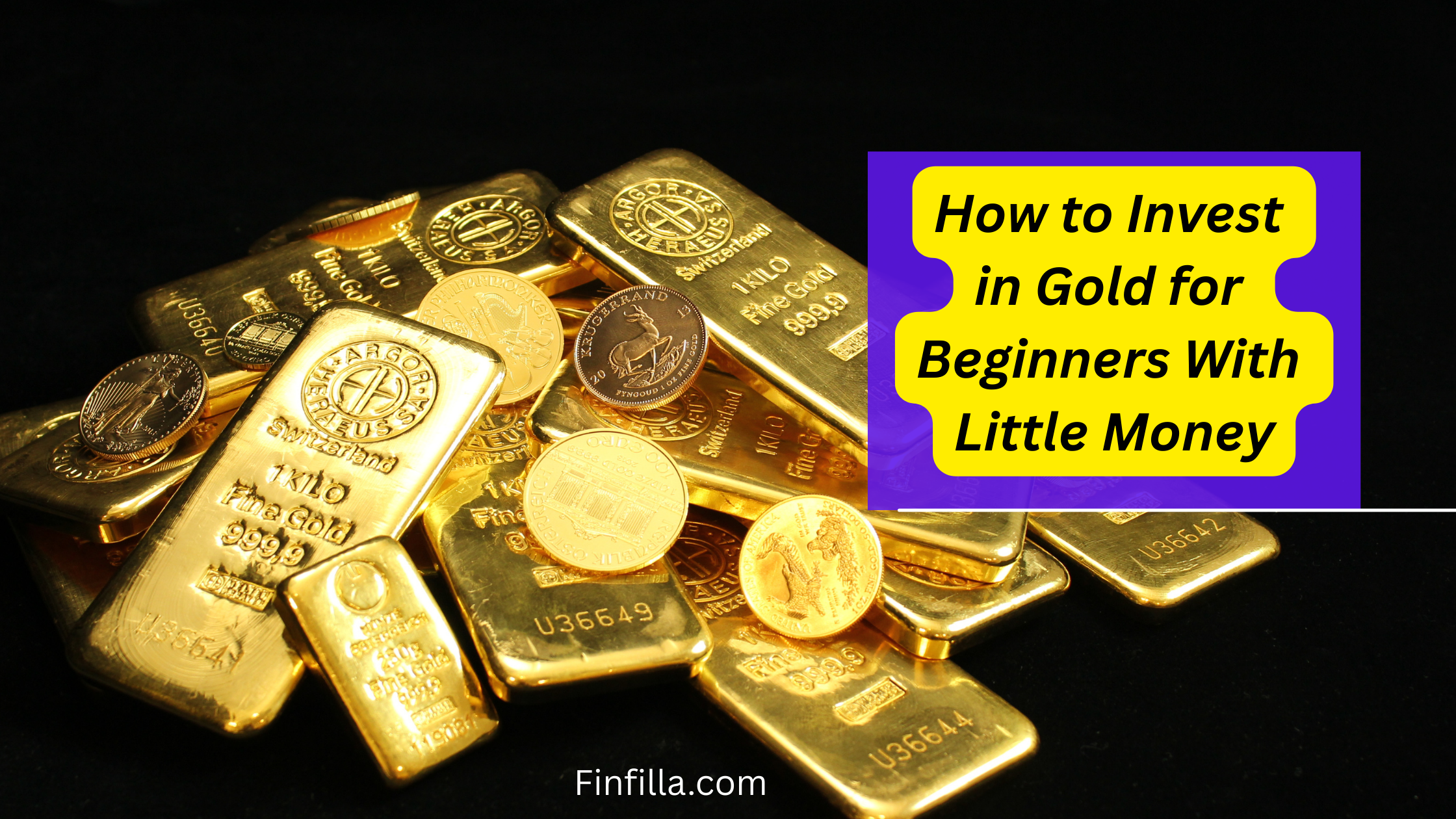
Investing in gold is a smart way to add some safety to your money. It helps when other things like stocks go up and down a lot or when everyday prices rise too fast (that’s called inflation).
Gold doesn’t always make you rich overnight—it’s more like a steady helper that keeps your savings from losing too much value over time, but as a beginner, they have the question in their mind of how to invest in gold for beginners with little money.
Because as a beginner they can’t invest a lot of money without knowing about it, so I am here for them to tell them about it.
In this article I am going to tell about it, so read this article till the end.

Should You Invest in Gold ?
Gold is like a strong, reliable friend for your money.
It doesn’t promise to make you super rich fast, but it can help keep your savings safe when things get tough in the economy. Right now, in early 2026, gold is very popular and its price is really high — around $5,200 for one ounce.
Many smart money experts think the price will keep going up this year, maybe even reach $5,500 to $6,000 by the end of 2026.
They say this because people are worried about the economy slowing down, wars and problems around the world, and big banks still buying lots of gold.
One big reason to think about gold is that it acts like a safety net. When stock markets drop or prices of everyday things (like food and gas) go up a lot, gold usually holds its value better than many other investments.
It doesn’t always move the same way as stocks or the dollar, so having a little bit of gold can make your whole money plan feel calmer and more balanced.
Most financial advisors in the USA suggest putting only a small part — maybe 5% to 10% — of your total savings into gold. That small amount is often enough to get the protection without taking big risks.
But gold is not perfect. It doesn’t pay you extra money like a savings account, bonds, or dividend stocks do. You only make money if the price goes up when you sell it later.
If the economy suddenly gets very strong, interest rates shoot up, or the world feels more peaceful, the gold price could stay flat or even drop for some time.
After such a big increase in the last few years, some people think there might be a small pull-back (a little drop) in 2026 before it climbs again.
Also, if you buy real gold bars or coins, you have to pay for safe storage and insurance.
That’s why many people in the USA choose easier ways like gold ETFs (special funds you buy like stocks) or gold mining company shares — they are simple to buy and sell through a regular brokerage account.
So, in easy words for most regular people in the USA: Yes, adding a little gold to your investments can be a smart move right now, especially if you want some extra protection from uncertainty.
It’s a good idea for long-term savings, retirement plans, or just feeling more secure about your money.
But don’t put too much in — keep the biggest part in things that can grow over time, like stock index funds or a mix of stocks and bonds.
Gold is helpful, but it’s only one part of a smart money plan. If you’re not sure how much is right for you or how to buy it, talk to a trusted financial advisor. They can help you make choices that fit your life and goals perfectly.
Gold Price Snapshot ( February 2026 )
| Item | Details |
|---|---|
| Current Price (approx.) | $4,870 – $4,950 per ounce USD |
| Change This Year (so far in 2026) | Mixed—some dips after big 2025 gains, but still high |
| Change Over Last Year | Up roughly 65–68% (a huge jump!) |
| Change Over Last Month | Up about 5–6% on average |
| Recent Peak (all-time high) | Around $5,600+ in early 2026 |
How Gold Has Grown Over Time ( Average Yearly Gains )
Gold doesn’t rise every year—it shines brightest during uncertain times but can stay flat or drop when things feel calm.
| Time Frame | Gold’s Average Yearly Return | Quick Note |
|---|---|---|
| Last 1 Year (roughly 2025–2026) | Around 65–68% | One of the strongest years in decades |
| Last 5 Years | About 20–22% per year | Boosted by global worries and inflation |
| Last 10 Years | Around 14–15% per year | Very good, often beat rising costs of living |
| Last 20–25 Years | About 10–11% per year | Turned small investments into much bigger ones over time |
| Very Long Term (since ~2000) | Sometimes beat stocks in rocky periods | But stocks usually grow more in peaceful, growing economies |
How to Invest in Gold for Beginners With Little Money ?
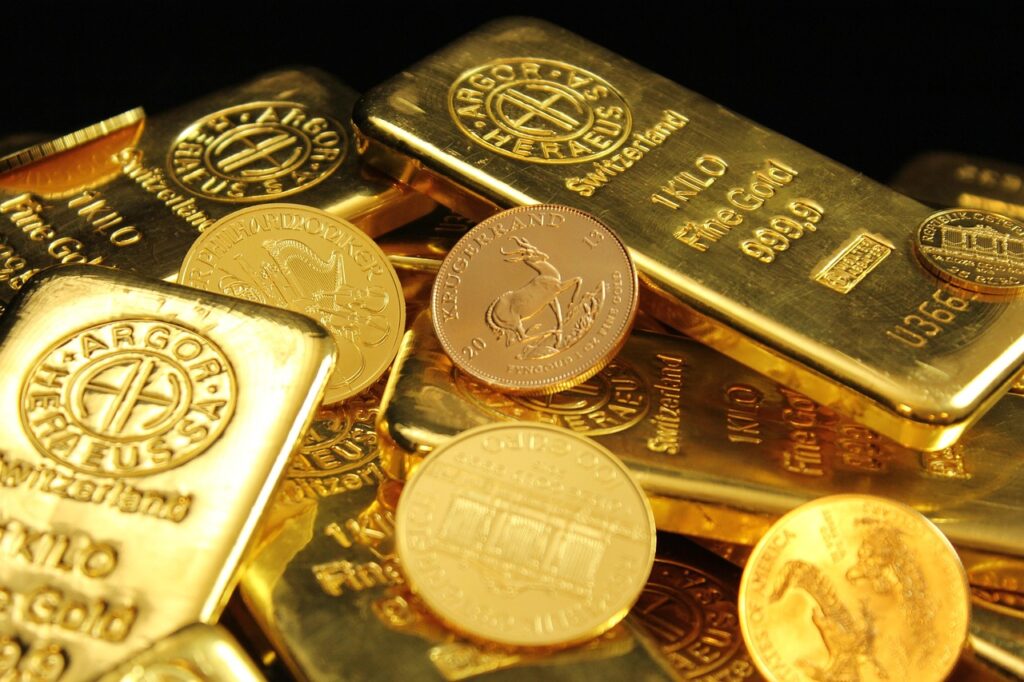
Putting your money into gold can be a smart step to keep your savings safe, especially when prices are super high right now.
As of late January 2026, gold is trading around $5,200 to $5,300 per ounce (it moves up and down every day because of world events, economy news, and more).
In the USA, you don’t need a ton of cash to begin. Lots of simple options let you start with just $10, $50, or $100. The best ones for new people avoid the hassle of keeping real gold bars or coins at home (no worries about theft or safe storage).
Let`s understand it.
1. Gold ETFs – The Simplest Choice for Most Beginners
Think of gold ETFs as shares you buy that follow the real price of gold.
The fund keeps actual gold locked in big, safe vaults, and you own a tiny piece without ever seeing or holding it.
These trade just like normal stocks on your phone or computer during market hours. Some top ones right now are:
- SPDR Gold MiniShares (GLDM) — really low yearly cost (around 0.10%), perfect for keeping more of your gains.
- iShares Gold Trust (IAU) — cheap fees (about 0.25%), huge and trusted.
- SPDR Gold Shares (GLD) — the biggest name, but a bit more expensive (around 0.40%).
The cool part? Apps like Robinhood, Fidelity, Vanguard, Charles Schwab, or Webull let you buy fractional shares. So even if one full share costs a few hundred bucks, you can grab just $10, $50, or whatever you have.
Steps to try it: Sign up for a free account (quick online), search the ticker like “GLDM”, pick how much to spend, and buy. You can even set auto-buys each month.
Good points: No place to store gold, tiny fees, sell fast when you want, price matches gold closely.
Down sides: Small yearly fee, trades only when markets are open, it’s “paper” gold (not the real shiny stuff).
This is what most new folks pick—easy, cheap, and no big risks.
2. Gold Mutual Funds – Great for Adding Money Bit by Bit
These are like ETFs but run as regular mutual funds. The company buys gold stuff (often ETFs) for you, and you invest through them.
You can kick off with $50 to $100, or set up $25 a month automatically from your bank.
Places like Fidelity or Vanguard have good low-cost ones that stick close to gold’s price.
Good points: Perfect for steady saving (buy the same dollar amount each time—no guessing the best day), hands-off once set up, beginner-friendly.
Down sides: Fees might be a touch higher than the cheapest ETFs, and buys happen at the end of the day (not instant).
If you like the idea of “set it and forget it,” this fits well—great for paycheck-to-paycheck adding.
3. Small Pieces of Real Gold – If You Want Something You Can Touch
Some people love owning actual gold you can see and hold. You buy tiny bits online from safe sellers.
Websites like APMEX, JM Bullion, or apps like OneGold sell small coins, bars, or fractions (starting around $50–$200 or so, based on today’s high prices).
Some let you own real gold in a vault (digital style), and you can get it shipped later if you want.
Good points: Feels real and exciting, you truly own the metal.
Down sides: Costs extra (called premium) over the base gold price, plus shipping if you take it home, and you need a safe spot to keep it (or pay for storage). Selling takes more steps.
Skip big full-ounce bars (way over $5,000 each now). Use this for fun small buys, not your main plan.
Quick Side-by-Side Look (Best for Small Budgets)
| Option | How Much to Start | Need a Broker App? | Worry About Storage? | Top Perk | Good For |
|---|---|---|---|---|---|
| Gold ETFs (like GLDM) | $10–$100 (parts of shares) | Yes (free ones easy) | No | Fast trades, super low cost | Easy start, no fuss |
| Gold Mutual Funds | $50–$100 or $25/month | Yes | No | Auto monthly adds | Slow, steady building |
| Small Real Gold | $50–$200+ | No (buy direct) | Yes if you get it home | Hold real shiny gold | Want to feel/see it |
Easy Tips to Get Going Right Now
- Pick gold ETFs to start—try Robinhood or Fidelity (free to open), search GLDM or IAU, buy a small amount today. It’s the least stress for tiny money.
- Only use cash you can leave alone for years—gold helps in bad times, not for fast spending.
- Stick to big, trusted names to avoid tricks or bad deals.
- Check prices free on sites like Kitco or GoldPrice.org, but don’t watch every minute—focus on the long game.
- Be patient: Gold grows slowly but safely when things get tough.
Why Gold is Good Investment for New Investors ?
Gold works like a shield for your money. When stocks fall hard or prices for everyday things go up fast (inflation), gold usually stays steady or climbs in value.
It’s not meant for quick big wins—it’s more about slow, safe growth over many years (like 5 to 10+).
Right now in 2026, gold prices are near all-time highs because of shaky world news and money worries.
Smart folks say put only a small part of your savings in gold—maybe 5% to 10% total—so the rest of your money can grow in other places like stocks. Start tiny and add a bit each month to smooth out the ups and downs.
Gold Growth Rate Per Year
Gold’s price doesn’t increase by the same fixed amount every single year, like a bank fixed deposit or a regular salary hike.
Instead, it changes a lot depending on world events — things like high inflation, economic troubles, wars, weak US dollar, or when people feel scared about the future. Some years it jumps up a lot, other years it drops or stays flat.
Here’s how gold has done in the USA (prices in US dollars per ounce):
- Over very long periods (like from the 1970s when the US dollar fully stopped being linked to gold, up to now), gold has grown on average about 7-10% per year when you smooth out all the ups and downs (this is called the compound annual growth rate, or CAGR — it shows steady average growth over time).
- Looking at the last 20-25 years (roughly from 2000 to 2025), the average yearly growth has been around 10-11% per year. For example, reliable data shows about 10.9% average annual return over 25 years, with the price rising over 1,000% in total during that time.
- In the last 10 years (around 2015-2025), it has performed even better, with average growth of about 13-16% per year, thanks to strong recent gains.
- Very recently (in 2024-2025 and into early 2026), gold has grown really fast. It rose over 25-30% in some years, and the price reached highs around $5,200 to $5,600 per ounce in January 2026 (though it moves daily and can dip too).
Important points to keep in mind:
- Gold can fall sharply in good economic times (like drops of 10-30% in some past years).
- It doesn’t pay any interest, dividends, or regular income like stocks or bonds do.
- Many people buy gold mainly as a “safe place” during bad times — to protect money from inflation, currency weakness, or uncertainty — rather than expecting quick riches every year.
So, if you look at the long run, gold tends to grow about 8-11% per year on average, but it’s not smooth or promised.
It’s more like a bumpy ride compared to stocks, which have often grown faster over very long periods but come with their own bigger risks. Gold shines brightest when the world feels unsafe!
Benefits of Investing in Gold for Beginners
Investing in gold is a simple, reliable option for beginners in the USA who want to add some protection to their savings without going after fast, risky gains.
It’s like having a backup plan for your money when life gets unpredictable. Here’s the main benefits.
1. Gold Helps Gight Against Everyday Prices Going Up (Inflation Shield)
Over time, the cost of things like food, gas, rent, doctor visits, and college tuition keeps climbing—this is inflation quietly shrinking what your dollars can buy.
Cash in a regular bank account or under your mattress loses real value year after year. Gold tends to perform well here: its price often rises or at least stays solid when inflation heats up.
Historically, it has preserved purchasing power better than plain money during high-inflation periods.
For everyday Americans dealing with recent price jumps, even a modest amount of gold can help your savings hold their worth so you can still afford the same lifestyle down the road.
2. Gold Gives Comfort When the World Feels Risky (A Safe Spot in Bad Times)
When big troubles hit—stock markets plunge, wars flare up, elections cause drama, or the economy slows—people get worried and shift away from stocks or other volatile investments.
They move toward gold because it’s a global favorite that’s not controlled by any one company or government policy.
During those shaky moments, gold frequently holds its ground or climbs higher while other assets drop.
In 2026, with ongoing international tensions, policy shifts, and market nerves, gold continues to serve as that steady, reassuring part of a portfolio when headlines make everything else feel uncertain.
3. Gold Spreads Out Your Bets So One Bad Move Doesn’t Hurt Too Much (Diversification Boost)
Putting every dollar into the same type of investment—like all in stocks, one sector, or just bonds—is dangerous. If that area crashes, your whole plan suffers.
Gold follows its own path: it often behaves differently from stocks, bonds, or real estate. When markets get bumpy or stocks fall, gold can stay stable or even increase in value.
Many experts suggest starting with just 5-10% of your investments in gold—this tiny portion can calm overall swings and make your money feel less rollercoaster-like.
It’s like mixing different foods on your plate; if one dish goes bad, the meal isn’t ruined.
4. Gold Has Stood the Test of Time As Real Wealth (Proven Staying Power)
For thousands of years, across every era and culture, gold has been valued as true money and treasure—long before the US dollar, banks, or digital wallets.
It doesn’t decay, break down, or become useless.
While governments sometimes print extra money (reducing each dollar’s value) or businesses fail, gold remains limited in supply and widely desired.
It has never lost all its worth. For beginners saving for big future goals like retirement, a home, kids’ education, or family security, gold provides a dependable way to store value that has survived centuries of ups and downs.
5. Gold Turns Back Into Cash Fast And Easily (Quick to Sell)
If you suddenly need money—for an emergency, unexpected bill, or just to take profits—gold is straightforward to sell.
In the US, you can use trusted online dealers (like APMEX or JM Bullion), local coin shops, major retailers, or even some banks.
Popular items like American Eagle or Buffalo coins are especially easy because they’re government-minted, trusted for purity, and recognized everywhere.
Unlike selling a house (months of waiting) or certain stocks (possible delays), gold usually lets you get cash quickly with minimal trouble, especially if you follow current market prices and avoid shady buyers.
6. Gold is Something Physical You Can Actually Own And Hold (Real Security Feeling)
Most investments today are just digital numbers on apps, screens, or statements—easy to worry about hacks, crashes, or account problems.
Physical gold, like a 1-ounce coin or small bar, is a real object you can touch and store yourself.
Keep it in a sturdy home safe, a bank safe deposit box, or through secure vault services. Many people in the US appreciate this hands-on aspect because it feels more under your control, especially during uncertain times.
There are also convenient options like gold ETFs (bought like stocks) or gold IRAs (tax-friendly for retirement) that let you benefit without handling the metal directly.
Of course, gold has limits—it doesn’t generate regular income like interest from bonds or dividends from stocks, daily prices can fluctuate (as we’ve seen with recent drops), and physical gold involves minor costs for safe storage.
But for US beginners, it’s wise to begin small (perhaps 5-10% of your total savings or portfolio) using beginner-friendly choices: ETFs for simplicity, physical coins/bars from reputable sources, or IRAs for long-term tax perks.
In 2026, even with some price pullbacks, gold’s reputation as a guard against inflation, volatility, and uncertainty keeps it popular.
Start easy—watch daily prices (they move fast!), steer clear of hype or questionable offers, and think about talking to a trusted financial advisor if needed.
Gold won’t make you overnight wealthy, but handled thoughtfully, it brings solid protection and calm to your financial setup!
Read More
Conclusion
Investing in gold with just a little money for beginners is really easy these days, especially with low-fee gold ETFs like GLDM or IAUM that let you start with almost nothing.
Choose one simple option that feels right, open an account, and begin with whatever small amount you have—even $10 or $20.
Stay patient, keep adding a bit when you can, and think of gold as just one small part of your overall money plan.
It’s not about quick wins—it’s a reliable way to add some protection and steady growth to your savings. You can do this! Take that first small step today and build from there.
FAQs ( Frequently Asked Questions )
Why Put Money in Gold ?
Gold acts like a shield—it often stays strong or climbs when stocks tumble, living costs soar, or the news feels scary.
Is Gold Worth It Right Now ?
It’s been on a big run lately, so it’s solid for safety, but don’t expect endless gains. Use it as a small piece of your overall plan.
Simplest Way to Start As a Newbie ?
Grab gold ETFs (try GLD or IAU) through any normal stock app or broker. It’s like buying shares, no hassle with storing metal.
Should I Get Actual Gold Bars or Coins ?
Sure, if you like holding the real thing—but skip it if you hate dealing with safes, insurance, or extra fees. ETFs win for ease.
Can I Begin With Just $100 or Less ?
Totally—gold ETFs let you buy tiny pieces. Some platforms even sell digital gold bits for pocket change.

I am Ranjeet Tiwari from Dhanbad, Jharkhand. I have 5 years of experience in the finance industry. I worked and researched in finance and gained a lot of knowledge about finance. In November 2025, I decided to share a people’s financial guide through my website (https://finfilla.com/) that will help them to achieve financial freedom in their lives, and this is the main motive for starting this website.