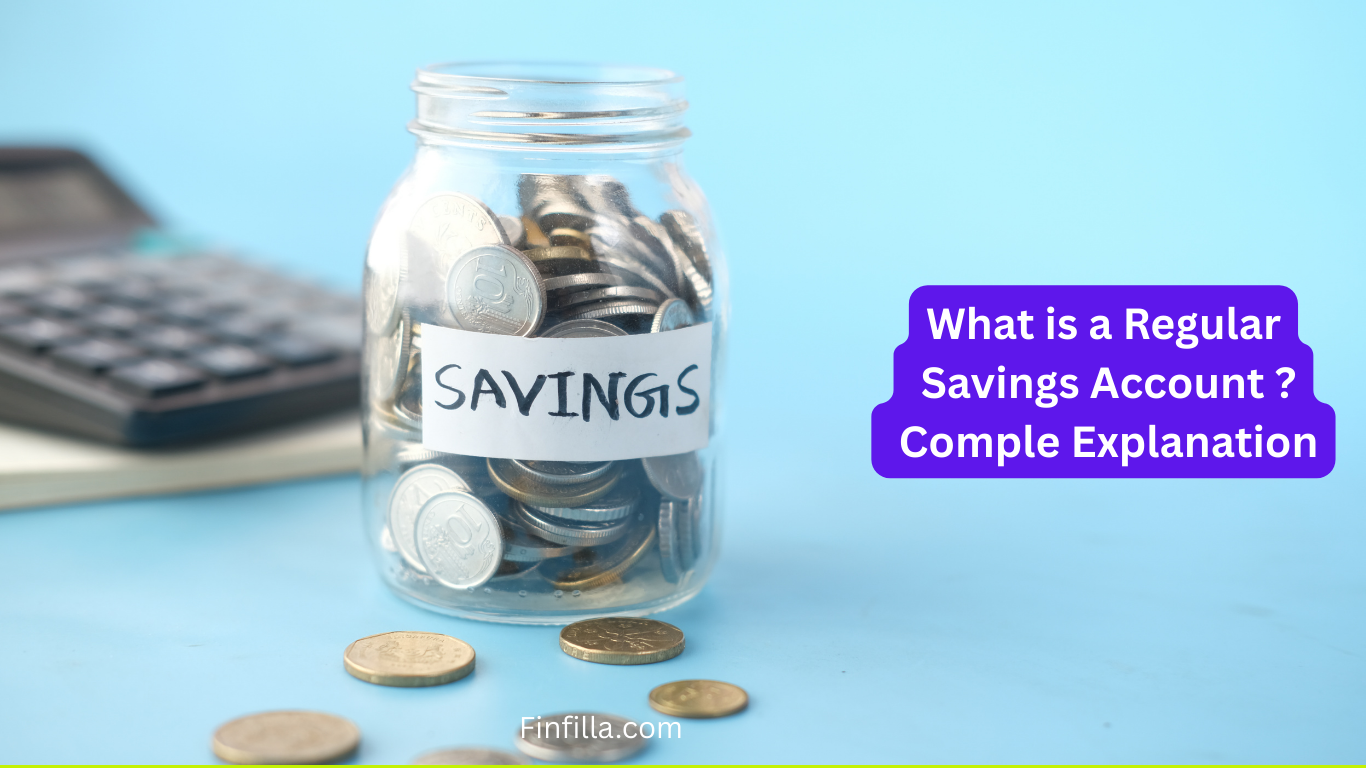
A regular savings account is one of the easiest and safest places to keep money in the United States when you want to save instead of spend.
This article is not just going to be about what a regular savings account is; it is going to be about how it works, whether it is right for you, and the advantages and disadvantages of regular savings accounts, so you need to read this article till the end before opening a regular savings account.

What is a Regular Savings Accounts ?
A regular savings account is a basic, everyday kind of bank account where you can safely keep money that you don’t plan to spend right away.
Think of it as a special spot at your bank or credit union that’s separate from your checking account (the one you use for daily stuff like paying bills or swiping your debit card).
You put extra cash in this savings account, and the bank gives you a small thank-you payment called interest.
The interest rate is usually pretty low these days—often less than 1%—so it’s not a way to get rich quick, but it’s still free money for keeping your cash there.
Your money stays very safe in a regular savings account. If the bank is FDIC-insured (most are in the United States), the government protects up to $250,000 of your money per person, even if something goes wrong with the bank.
You can add money whenever you want and take it out when you need it, but banks often put a limit—like only six withdrawals or transfers per month—to encourage you to leave the money alone and save.
It’s super easy to open one, usually with little or no money to start, and you can handle everything online, on your phone, or at the bank branch.
This type of account is perfect if you just want a simple, no-drama place to build an emergency fund, save for a big purchase, or keep extra cash separate from your spending money.
It’s not the highest-paying option (high-yield savings accounts give much better interest rates), but it’s straightforward, reliable, and great for beginners or anyone who wants basic saving without any complicated rules.
How Does Regular Savings Accounts Work ?

A regular savings account is like a safe little box at the bank where you keep money you don’t want to spend right now.
It’s not your everyday spending account (that’s your checking account — the one you use for groceries, gas, Netflix, etc.). But the question is how does it work ? Let`s know about it.
1. How you get started and open the account
Getting a regular savings account is really straightforward. You can do it at almost any bank or credit union — either by walking into a branch, using their website, or downloading their phone app.
They’ll ask for basic things like your name, birthday, home address, Social Security number, and a photo ID (like a driver’s license).
Sometimes they want to see something that shows your address, like a light bill or bank statement.
Lots of people open this account together with a checking account because the two work well as a team.
Some banks let you start with no money at all, while others might ask you to put in a small amount first — usually $1 to $25.
After everything is approved, you get your new account number and you’re ready to go.
2. Adding money to the account
Putting money into your savings account is super easy and can be done lots of different ways.
The quickest and free way is moving cash from your checking account — you just do it on the bank’s app or website in a couple of clicks.
You can also tell your job to send part of every paycheck straight into savings — this is a popular trick to save money without even noticing.
If you have cash or a check, you can bring it to the bank and hand it to a teller, drop it in an ATM that takes deposits, or even snap a picture of the check with your phone using the bank’s app. The money usually appears in your account in a day or two.
3. Earning a little extra money (interest)
The nice part about a savings account is that the bank pays you a small thank-you bonus called interest for leaving your money with them.
At most regular banks (the ones with buildings you can walk into), the interest rate is pretty small — often between 0.01% and 0.50% a year.
So if you keep $1,000 sitting there for a full year, you might earn anywhere from 10 cents to $5.
The bank usually figures out the interest every day and adds it to your account once a month. This is called “compounding” — it means you slowly start earning a tiny bit of interest on the interest you already got. It’s not fast, but it’s free extra money just for keeping your cash safe.
4. Why your money stays protected
Your money in a regular savings account is very secure. In the USA, a government program called FDIC insurance watches over almost every bank.
This protection covers up to $250,000 of your money per person at each bank.
That means even if something bad happens to the bank (which almost never does), the government promises to give your money back.
Credit unions have the same kind of safety through a group called the NCUA. So whether you have $500 or $50,000 in there, your savings are one of the safest places to keep cash.
5. Taking money out when you need it
You can get your money whenever you want — it belongs to you, not the bank.
The simplest way is to move it back to your checking account using the app or computer — most of the time it happens right away or the next day.
You can also visit the bank and ask for cash, or use an ATM if your savings account has an ATM card.
In the past, there was a rule that said you could only take money out or transfer it 6 times a month. A lot of banks don’t follow that rule anymore, but some still do.
If you go over the limit at those banks, you might get a small charge or they might ask you to use a different kind of account.
That’s why savings accounts work best for money you want to leave alone most of the time.
6. Fees you might run into (and how to avoid them)
Some savings accounts have a small monthly charge — usually $4 to $12 — but most banks give you easy ways to skip it.
Common tricks to avoid the fee are: keep a certain amount in the account all the time (like $500 or $1,000), have a checking account at the same bank, set up automatic deposits from your paycheck, or be a student, kid, or older adult (many banks drop fees for these groups).
Before you open the account, look at the “account rules” or “fee list” so you know what to expect. If a fee ever surprises you, call the bank — they often take it off once if you ask nicely.
Read More – Common Savings Mistakes First Time Earners Make in 2026
Features of a Regular Savings Accounts ?
A regular savings account is a basic bank account that helps you keep money safe while it earns a tiny bit of extra money called interest.
It’s not for daily spending (that’s what checking accounts are for). Instead, it’s a good spot for money you want to save for later — like for emergencies, a new phone, a trip, or just to feel more secure.
Your Money Stays Very Safe
Putting money in a regular savings account is one of the safest choices you can make in the USA.
Most banks are protected by something called FDIC insurance.
This is a promise from the government that if the bank ever gets into big trouble, your money is still safe — up to $250,000 per person.
So even if something bad happens to the bank, you won’t lose your savings (up to that amount).
This makes it much safer than keeping lots of cash at home or putting money into things that can lose value.
It Gives You a Small Amount of Interest
When you keep money in a savings account, the bank pays you a little thank-you called interest.
This interest gets added to your account slowly — usually every month — and then it starts earning interest too (this is called compounding).
But here’s the thing: regular savings accounts at big banks usually pay very little interest. Right now, most of them give between 0.01% and 0.60% per year.
That means if you keep $1,000 in the account, you might earn only $1 to $6 in a whole year. It grows, but very slowly.
Super Easy to Open and Use
Opening one is really simple — even if you’ve never had a bank account before.
You can do it online in just a few minutes or walk into a bank branch.
All you normally need is:
- A photo ID (like a driver’s license)
- Your Social Security number
- Sometimes a small starting amount ($0 to $25)
Many people open their savings account at the same bank where they already have checking, so everything connects easily.
After it’s open, you can check your balance, get alerts, or move money using your phone or computer.
Putting Money In and Taking Money Out Is Simple
Adding money is easy — you can:
- Deposit cash at the bank
- Take a picture of a check with your phone
- Get your paycheck sent straight there
- Move money from another account
Taking money out is just as easy — you can transfer it to checking, use an ATM, or go to the bank.
Most banks let you take money out as many times as you want now (the old 6-times-per-month rule was removed).
But some banks still charge extra fees if you take out money too often, so it’s smart to ask about their rules.
Watch Out for Possible Fees
Some regular savings accounts have small fees, but you can usually avoid them.
The most common one is a monthly fee (around $4 to $10).
Banks often let you skip this fee if you:
- Keep a certain amount in the account (like $500 or $1,000)
- Have a checking account with them and get direct deposits
Other possible fees include charges for paper statements or using ATMs that don’t belong to your bank.
Lots of people choose accounts with no monthly fee to keep things simple and free.
Helpful Extra Features
Regular savings accounts come with nice little helpers:
- You can set up automatic savings — like moving $25 from checking every week without thinking about it
- You get easy online and mobile banking to see your balance anytime
- You can get text or email alerts if your balance gets low
- Many banks let savings help your checking account if you accidentally spend too much (called overdraft protection)
- You can talk to real people at branches or on the phone if you need help
These small things make saving feel easier and less stressful.
Read More – What is Interest Saving Balance ?
Advantages and Disadvantages of a Regular Savings Accounts ?
There are some advantages and disadvantages of a regular savings account that you should know before opening a regular savings account.
Here’s how you can understand it easily.
Advantages of Regular Savings Accounts in the USA
Regular savings accounts are a safe and simple way to keep money in the United States.
They are very secure because most banks insure them through the FDIC (up to $250,000 per person), so your money is protected even if the bank faces problems.
You can easily take out cash or move money to your checking account whenever you need it, which makes these accounts great for emergency savings or money you might need soon.
Opening one is usually quick and easy, often done online or at a branch with very few steps.
Plus, they pay a small amount of interest, so your money grows a little without any risk of losing it in the stock market or other risky places.
Disadvantages of Regular Savings Accounts in the USA
Even though regular savings accounts are safe, they have some clear downsides. The biggest problem is the very low interest rates — many banks pay only 0.01% to 0.5% per year, which is much less than inflation.
This means your money hardly grows and can actually lose buying power over time.
Some accounts charge monthly fees or require you to keep a certain amount in the account, and if you don’t meet those rules, you could lose money instead of earning it.
It’s also easy to spend the money since it’s so simple to access, which can make it harder to save for bigger goals.
Compared to high-yield savings accounts or other options, regular savings accounts give very little return while still being just as safe.
Is a Regular Savings Account Good Choice For You ?
A regular savings account can be okay for you if you want something very basic, safe, and simple to handle.
These accounts, usually offered by big banks like Chase, Wells Fargo, or Bank of America, protect your money with government insurance (FDIC) up to $250,000.
That means your cash is secure even if something goes wrong with the bank.
You can pull money out whenever you want without any extra charges or waiting periods, which makes it handy for things like surprise expenses or keeping a small emergency fund.
The main downside is that the interest you earn is really low. Right now in the USA, most regular savings accounts give you only about 0.4% to 0.6% per year, and some big banks pay even less.
So if you keep $10,000 in there, you might make just $40 to $60 over a whole year.
When everyday prices go up because of inflation, your money actually buys less over time instead of growing.
A few of these accounts also charge small monthly fees if you don’t keep a certain amount in them, which takes away even more.
For most people, a high-yield savings account is a much smarter pick.
These accounts (from online banks like Ally, Capital One 360, SoFi, or Discover) still keep your money completely safe with the same FDIC protection and let you take it out easily.
But they pay way more interest—often 4% or higher right now. That same $10,000 could earn you $400 or more in a year, helping your savings grow faster without any extra risk.
They usually have no monthly fees and no rules about keeping a minimum balance, and you can open one online very quickly.
In simple words: a regular savings account works fine if you really like going to a bank branch in person or you only want to save a small amount and keep things easy.
But if you want your money to grow more while staying safe and easy to use, go for a high-yield savings account instead—it gives you a lot more reward for the same effort.
Read More – How to Save Money on Groceries Each Month ?
Read More – When Should You Save For Retirement ?
Final Thought
A regular savings account is a safe, simple, beginner-friendly way to keep money separate from your everyday spending.
It protects your cash and gives you a little interest — even if it’s not a lot.
It’s perfect for starting an emergency fund or saving for something special.
If you want your money to grow faster, many people now choose high-yield savings accounts (especially online ones) that pay 10 to 20 times more interest — but still keep your money completely safe.
Pick what feels right for you — and start small if you want!
FAQs ( Frequently Asked Questions )
Who Can Get One ?
Pretty much anyone in the US — citizens, residents, or some others. You’ll need things like a Social Security number, ID (driver’s license or passport), and address proof. Kids can have one with a parent or guardian helping.
2. How Little Money Do I Need to Open It ?
It changes by bank. Lots start with $0 to $100, especially online high-yield ones. Some bigger banks want $25 to $500.
3. How Much Interest Will I Actually Make ?
Interest gets added regularly (often monthly) and compounds (grows on itself).
- Typical traditional accounts: Around 0.4%–0.6% APY (slow growth).
- High-yield options: 4%–5% APY or sometimes higher (much better returns). Rates shift with the economy, so check current ones.
4. Can I Pull Money Out Whenever ?
Yes, in most cases — it’s flexible, unlike locked CDs. Some banks used to cap “easy” withdrawals at 6 per month, but many don’t charge extra now.
5. Will There Be Monthly Fees ?
Usually not. Online high-yield accounts often have zero fees. Traditional ones might charge $5–$15 if your balance dips low (waived with higher amounts or linked accounts).

I am Ranjeet Tiwari from Dhanbad, Jharkhand. I have 5 years of experience in the finance industry. I worked and researched in finance and gained a lot of knowledge about finance. In November 2025, I decided to share a people’s financial guide through my website (https://finfilla.com/) that will help them to achieve financial freedom in their lives, and this is the main motive for starting this website.